This past summer, Americans marked the 250th birthday of the United States, an important milestone that prompted reflection on the ideas, values, and traditions that have shaped our nation. While the celebration has passed, the questions it raised remain as important as ever: What beliefs helped form America? What institutions protect our freedoms? And what responsibilities come with citizenship?
At 91ÌÒɫ, these questions are central to our mission. One reason we place a special emphasis on Western civilization is because understanding our nation's heritage helps students better understand themselves, their country, and the responsibilities of living in a free society.
But what does that mean?
Simply put, Western civilization is the story of the ideas, institutions, and cultural traditions that have influenced much of Europe, North America, and other parts of the world for thousands of years. It includes the development of law, self-government, scientific inquiry, philosophy, literature, and concepts of individual freedom that continue to shape our lives today.
Studying Western civilization is NOT about ignoring other cultures or histories. A well-rounded education explores the entire world. Our students learn world history, geography, and the contributions of civilizations across the globe. Understanding Western civilization helps students understand the heritage that has had a profound influence on the United States and the institutions that define American life.

Three Foundations of Western Civilization
A helpful way to understand Western civilization is through its three major roots: Jerusalem, Athens, and Rome.
Jerusalem: A Moral Foundation
From the Judeo-Christian tradition came the belief that every person possesses inherent worth and dignity. This tradition also contributed to a strong moral framework centered on responsibility, compassion, and care for others. These ideas have influenced Western literature, art, music, and public life for centuries.
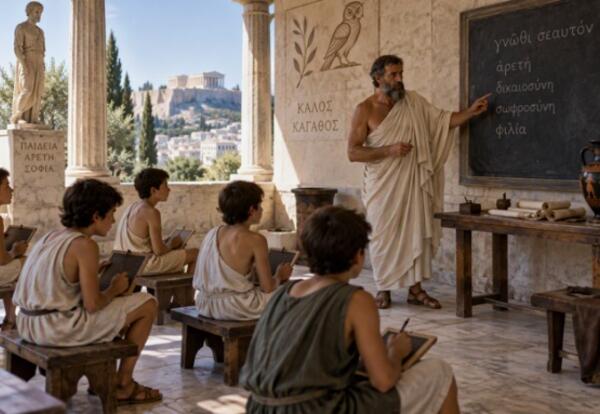
Athens: The Pursuit of Truth
Ancient Greece gave us a love of learning and a respect for reason. Greek thinkers asked enduring questions about justice, government, human nature, and the world around them. Their commitment to inquiry helped lay the groundwork for democracy, science, medicine, and philosophy.
Rome: Law and Order
Rome's influence can still be seen all around us today. Roman law shaped many modern legal systems, introducing principles such as the presumption of innocence, the importance of evidence, and the right to face one's accuser. Rome also excelled in engineering, infrastructure, and administration, leaving a lasting impact on how societies are organized.
Why This Matters for Students Today
At 91ÌÒɫ, we believe students benefit when they understand where the ideas behind our country come from. Studying Western civilization helps students connect ancient history to modern life. It provides context for understanding the Constitution, representative government, individual rights, free expression, private property, and civic responsibility.
More importantly, this heritage encourages students to wrestle with some of life's biggest questions:
What is justice?
What makes a good citizen?
Why does freedom matter?
What responsibilities do we owe to one another?
How can individuals contribute to the common good?
These are not merely historical questions. They are questions our students will face as future leaders, parents, professionals, and citizens.
A grounding in Western heritage also introduces students to some of humanity's greatest works of literature, philosophy, art, and political thought. By engaging with these ideas, students develop critical-thinking skills, learn to evaluate competing viewpoints, and gain a deeper appreciation for both the achievements and challenges that have shaped the modern world.
The American Inheritance
Over centuries, the traditions of Jerusalem, Athens, and Rome came together to influence the development of the United States. Ideas about natural rights, representative government, the rule of law, freedom of worship, freedom of expression, and the dignity of the individual became deeply embedded in American institutions. These ideas ultimately found expression in the Declaration of Independence, the Constitution, and the ongoing American experiment in self-government.
While the history of Western civilization is far from perfect, it has produced a powerful and enduring commitment to liberty, human dignity, and the belief that individuals possess rights that governments must respect.
A Heritage Worth Understanding
As America begins its next 250 years, it is worth remembering that the freedoms and opportunities we enjoy today did not appear overnight. They emerged from centuries of ideas, debate, sacrifice, and innovation.
At 91ÌÒɫ, we believe students are best prepared for the future when they understand the history and heritage that shaped the world they have inherited. A grounding in Western civilization helps students develop wisdom, civic understanding, and an appreciation for the enduring principles of liberty, personal responsibility, and human dignity. These lessons not only help students succeed academically, but also prepare them to become informed citizens and thoughtful leaders in their families, communities, and country.
A Note of Appreciation
This article draws upon research and materials compiled by Deborah Cole, who served as an instructional coach at 91ÌÒɫ for 16 years and has been an active leader in the charter school movement in Colorado Springs for more than 32 years. Her dedication to classical education, teacher development, and student success has helped shape the educational experiences of countless students and educators throughout our community.